Health and Safety Policy for Landscaping Camden Town
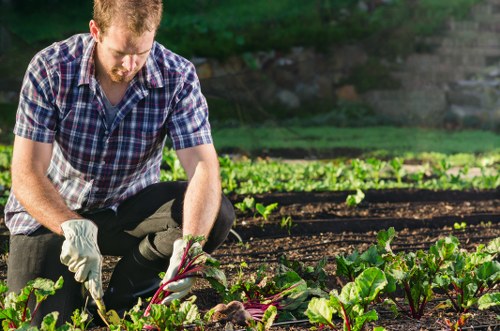 This health and safety policy for landscaping in Camden Town sets out the standards expected from everyone involved in outdoor work. It applies to all routine and seasonal tasks, including planting, turf care, pruning, soil preparation, hard landscaping, and maintenance. The aim is to protect workers, clients, visitors, and the public from avoidable harm while ensuring services are delivered responsibly and efficiently.
We are committed to maintaining a safe working environment through planned risk control, staff training, proper supervision, and regular review of working practices. Safety is treated as a core part of every job, not as an extra step. All employees and contractors are expected to work safely, report concerns promptly, and follow approved procedures.
This policy applies to all landscaping activities, whether carried out in private gardens, communal outdoor spaces, commercial premises, or transportable work sites. It also covers the use of hand tools, powered equipment, vehicles, ladders, chemicals, and lifting operations. Every task must be assessed so that hazards are identified before work begins and controls are put in place to reduce the risk of injury or damage.
Responsibilities
Management responsibilities include providing safe systems of work, suitable equipment, and appropriate instruction for each task. Supervisors must ensure that workers understand the risks associated with landscaping operations and that they are competent to complete their duties. Where specialist work is required, only trained and authorised personnel may carry it out.
Employees are responsible for taking reasonable care of themselves and others. They must use tools correctly, wear required protective clothing, and follow site instructions. They must not begin work if they believe conditions are unsafe. Any defect, near miss, or incident must be reported immediately so that corrective action can be taken without delay.
 Contractors and temporary workers must meet the same standards as permanent staff. They are expected to comply with this policy, use equipment safely, and cooperate with safety checks. Everyone on site has a duty to prevent dangerous behaviour, including unsafe manual handling, misuse of machinery, and failure to secure work areas.
Risk Assessment and Safe Working Methods
Before work starts, a site-specific risk assessment must be completed where needed. This should consider uneven ground, weather exposure, underground services, access restrictions, falling objects, noise, dust, and public interaction. The findings must be used to create practical control measures such as exclusion zones, warning signs, staggered operations, or changes to the work sequence.
Safe working methods must be followed at all times. This includes keeping pathways clear, stacking materials securely, and ensuring that tools are stored safely when not in use. Machinery should only be operated on suitable terrain and by trained workers. If conditions change, the task should pause until the situation is reassessed.
Tasks involving cutting, digging, lifting, or working at height require extra care. Workers should use correct techniques, avoid rushing, and seek assistance for heavy or awkward loads. In landscaping services, good planning is often the best prevention: the right tool, the right person, and the right method reduce risk and improve quality.
Equipment, Chemicals, and Protective Measures
 All tools and equipment must be inspected before use and maintained in safe working order. Defective items must be removed from service immediately and labelled clearly. Guards, brakes, switches, and safety features must never be bypassed. Equipment should be used only for its intended purpose.
When using fuels, fertilisers, herbicides, or cleaning products, workers must follow manufacturer instructions and any internal controls. Storage must be secure, ventilated, and clearly labelled. Chemical handling requires careful attention to avoid spills, contamination, and exposure to skin, eyes, or inhalation. Suitable gloves, eye protection, and other personal protective equipment should be worn where required.
Personal protective equipment must be selected according to the task and the risk involved. This may include high-visibility clothing, gloves, safety boots, hearing protection, eye protection, and dust masks. PPE is not a substitute for safe methods, but it is an important final layer of protection. Damaged or unsuitable PPE must be replaced promptly.
Welfare, Training, and Incident Response
Welfare arrangements must support safe working throughout the day. Workers should have access to drinking water, rest breaks, and suitable facilities where available. Fatigue, dehydration, and poor weather can reduce concentration and increase the chance of mistakes, so working hours and task demands should be managed sensibly.
Training is essential to safe landscaping practice. New staff must receive induction covering hazards, emergency procedures, equipment use, manual handling, and reporting responsibilities. Refresher training should be provided whenever processes change or where risk trends show a need for improvement. Competence must be maintained through supervision, instruction, and regular review.
 In the event of an incident, first aid should be provided where appropriate and emergency services contacted if needed. The area must be made safe to prevent further harm. Any accident, injury, property damage, or dangerous occurrence must be recorded and investigated so that lessons can be learned and similar events avoided.
Review and Continuous Improvement
 This policy will be reviewed regularly to ensure it remains suitable for landscaping operations and reflects current working practices. Updates may be required after incidents, changes in equipment, new legislation, or revised operational risks. Improvement is a continuous process and depends on observation, communication, and prompt action.
By following this policy, landscaping work can be carried out with care, consistency, and respect for health and safety. Every task should be approached with awareness, preparation, and accountability so that safe outcomes are built into daily operations and maintained across all projects.